Choosing the right mobility equipment is essential for enhancing independence. Whether you need assistance indoors or outdoors, understanding how to select mobility equipment for indoor and outdoor use can greatly impact your daily life. Mobility aids vary widely in function and design. For instance, a walker may serve well indoors, but an outdoor scooter could offer greater freedom outside.
Familiarizing yourself with different options is vital. Consider your environment and specific needs. An indoor wheelchair needs to navigate tight spaces, while an outdoor model should handle rough terrain. Reflect on your lifestyle and routine; this will guide your selection process. Keep in mind that not all equipment fits perfectly, and trial and error can be part of the journey. You may find that a solution works in one setting but not another.
Ultimately, the goal is to enhance mobility and comfort. Balance, safety, and practicality play crucial roles in the decision-making process. As you explore, remember that the right choice not only involves functionality but also personal comfort and confidence. Choosing wisely can lead to a more fulfilling and independent life.
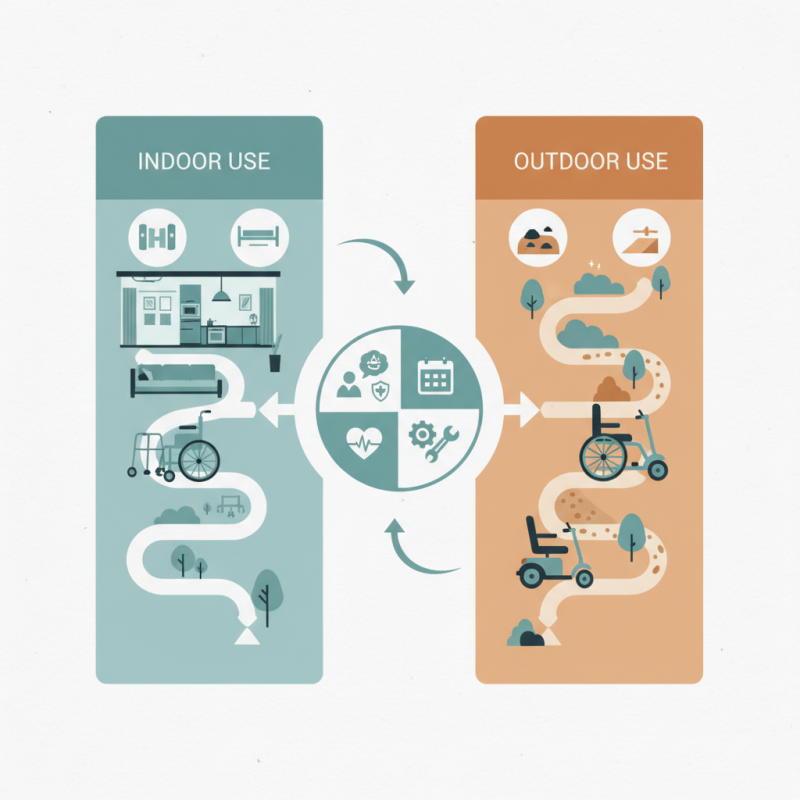
When choosing mobility equipment, understanding the types available is crucial. There are wheelchairs, scooters, walkers, and canes. Each has distinct features suited for different environments. Wheelchairs work well indoors but might struggle on uneven outdoor terrain. Similarly, scooters offer great outdoor mobility but can be cumbersome in narrow hallways.
Walkers provide stability for those needing support. They are versatile for both settings. However, they can be less effective on steep surfaces. Canes offer minimal support for individuals with balance issues. Yet, they may not be ideal for those with more severe mobility challenges.
It’s important to consider personal needs and the environment. Try to test equipment before making a decision. It might feel uncomfortable at first, but finding the right fit is essential. Reflecting on comfort and functionality can lead to better choices. Focus on how often the equipment will be used indoors versus outdoors. This balance can ensure greater independence and safety in daily activities.
When considering mobility equipment for indoor and outdoor use, it’s crucial to assess your specific needs. An estimated 26% of adults over 65 experience mobility limitations. Choosing the right equipment can significantly enhance their independence and quality of life. For indoor use, the layout of your home matters. Narrow hallways may require a compact mobility device. A study showed that around 50% of users prefer scooters or walkers at home.
Outdoor challenges differ greatly from indoor settings. Terrain can play a significant role in equipment selection. About 35% of users report difficulties navigating uneven surfaces. Consider if you need a device with all-terrain capabilities or one designed primarily for smooth pavements. Balance is essential; equipment that works well indoors may struggle outdoors. Evaluate features like wheel size and stability. Personal assessments are critical. Reflect on specific daily activities, like shopping or visiting friends, to ensure the chosen equipment meets your mobility challenges effectively.
This chart illustrates the usage percentage of various mobility equipment types for indoor and outdoor settings. Understanding these trends can help users make informed decisions based on their specific mobility needs.
When selecting mobility equipment, understanding its features and functions is vital. Indoor environments often have different requirements than outdoor spaces. For example, indoor devices may prioritize compactness and maneuverability. A device must easily navigate tight hallways or around furniture. Outdoor mobility aids need robust wheels and durable construction for uneven surfaces.
Tips: Always consider the weight capacity and adjustability of the device. Each user has unique needs. Some features may feel redundant but could enhance comfort significantly. Test drive various models in different settings.
Look for devices with ergonomic designs. These promote natural movement and reduce strain. However, not every ergonomic feature suits everyone. Some users find certain grips uncomfortable. Pay attention to the device's ease of transport. Look for foldable options if traveling frequently. Reflect on what works best for your lifestyle. Mobility should enhance freedom, not limit it.
| Feature | Indoor Use | Outdoor Use |
|---|---|---|
| Weight | Lightweight (10-25 lbs) | Sturdy (25-50 lbs) |
| Maneuverability | Tight Turning Radius | Stable on Uneven Terrain |
| Wheel Size | Small (5 inches) | Large (8-12 inches) |
| Adjustability | Customizable Height | Suspension Features |
| Storage | Compact Folding | Built-in Storage Basket |
| Terrain Capability | Smooth Surfaces | Grass, Dirt, Hills |
When choosing mobility equipment, safety is paramount. Always check the weight capacity of the equipment. This ensures it can support the user's needs effectively. Stability is another critical factor. Look for equipment with a wide base or a low center of gravity. This can help prevent tipping, especially on uneven surfaces.
Consider the materials used in the equipment. Some may not withstand outdoor conditions, while others may be too heavy for indoor use. Additionally, the design should accommodate easy maneuverability. If the user struggles to turn or navigate tight spaces, it may not be suitable for indoor applications.
User comfort should not be overlooked. Adjustability in height and seating can enhance the experience. Moreover, accessories like safety belts or armrests provide added security. Always prioritize the user’s feedback in the selection process. After all, even the best equipment may fall short if it doesn't meet individual needs and comfort levels.
Budgeting for mobility equipment is crucial for anyone considering their options. Reports suggest that about 70% of individuals with mobility challenges face financial constraints when seeking equipment. Equipment costs can vary greatly, impacting accessibility. For instance, wheelchairs can range from $500 to over $3,000 depending on features and customization. Many users may find it difficult to navigate these expenses.
Seeking financial aid can alleviate some of this burden. Medicare and Medicaid often help cover certain mobility devices, but the process can be complex. Users should gather necessary documentation and consult with healthcare providers. Some non-profit organizations also offer grants. Research indicates that these options can significantly improve access for those who struggle financially. However, eligibility criteria can be restrictive, leaving many individuals without support.
Consideration of long-term costs is also essential. Regular maintenance for mobility equipment can add to overall expenses. A well-maintained wheelchair can last for years, but neglect can lead to higher replacement costs. Users often overlook insurance co-pays, which can affect budgeting decisions. It’s vital to plan comprehensively to ensure ongoing mobility.
: Common types include wheelchairs, scooters, walkers, and canes. Each suits different environments and needs.
Wheelchairs are effective indoors but may struggle on uneven outdoor terrains. Testing is important for comfort.
Consider your home's layout. Narrow hallways may require compact devices for better maneuverability.
About 35% report difficulties on uneven surfaces. Choose devices with all-terrain capabilities if needed.
Walkers provide stability but may be less effective on steep surfaces. Personal needs vary significantly.
Ergonomic designs can enhance comfort but may not suit everyone. Some grips might feel uncomfortable for certain users.
Testing in different settings can help identify the best fit. Comfort and functionality are key for daily use.
Understanding weight capacity is vital. Each user has unique needs, and the right device can enhance independence.
Reflecting on usage frequency helps balance indoor versus outdoor needs. This ensures greater safety and independence.
Yes, look for foldable designs if traveling frequently. They provide convenience while maintaining functionality.
Choosing the right mobility equipment for both indoor and outdoor use is essential for enhancing independence and ensuring safety. To effectively understand how to select mobility equipment for indoor and outdoor use, one must first familiarize themselves with the various types of mobility devices available. Next, it's crucial to evaluate specific mobility needs based on the environments in which the equipment will be used.
Assessing features and functions is also vital, as some devices may offer specialized functions that cater to individual requirements. Safety considerations should not be overlooked, ensuring that the chosen equipment meets necessary safety standards. Lastly, budgeting for mobility equipment is important; understanding available options and potential financial aid can help in making informed decisions to secure the appropriate equipment without straining finances.

Merlix Chair