How Will Assistive Mobility Technology Shape the Future?

Time:2026-10-18 Author:Aria
0%

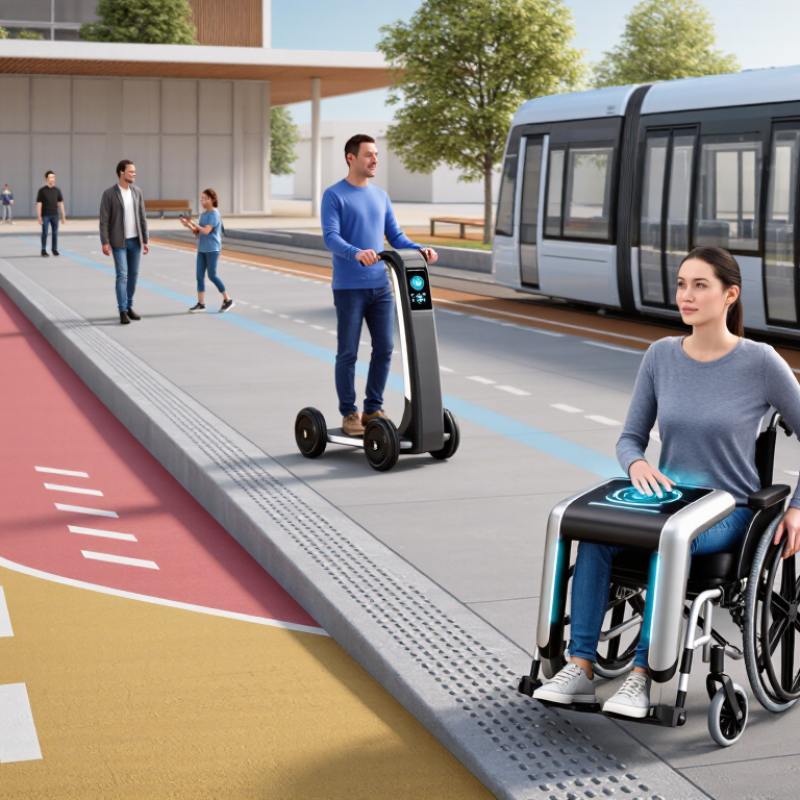
The question “what is the future of assistive mobility technology” now reaches far beyond powered wheelchairs. It includes intelligent walkers, robotic exoskeletons, adaptable seating, navigation software, and safer public transport. The World Health Organization and UNICEF reported in 2022 that more than 2.5 billion people need at least one assistive product. That figure could exceed 3.5 billion by 2050. These numbers reveal a major social need, not a niche technology market.

Innovation is becoming more personal and more practical. A smart wheelchair may detect a curb, adjust its speed, or warn a user about a low battery. A powered exoskeleton may help someone stand beside a kitchen counter, although comfort and affordability remain difficult challenges. Dr. Rory Cooper, a leading rehabilitation engineer and wheelchair researcher, has emphasized, “A wheelchair is not a medical device; it is a mobility device.” His view keeps human independence at the center of development.

The future will not be perfectly automated. Nor will every prototype improve daily life. The WHO Global Report on Assistive Technology warns that cost, weak distribution systems, limited repair services, and inaccessible environments still restrict access. A sophisticated device means little if a rural clinic cannot maintain it, or if replacement parts take six months to arrive. Progress therefore depends on inclusive design, reliable testing, ethical data use, and user experience. Some forecasts sound overly confident. They deserve scrutiny. Yet the direction is clear: assistive mobility technology is moving toward safer, connected, and more responsive support, shaped by real people rather than impressive specifications alone.

How Will Assistive Mobility Technology Shape the Future?

Definition and Scope of Assistive Mobility Technology

How Will Assistive Mobility Technology Shape the Future?

Definition and Scope of Assistive Mobility Technology

Assistive mobility technology includes tools that help people move safely, independently, or with less physical effort. It covers manual wheelchairs, powered mobility devices, walking aids, transfer equipment, and accessible transport systems. The field also includes software, sensors, and communication controls. A simple joystick can matter as much as an advanced navigation system.

Its scope reaches homes, hospitals, workplaces, schools, and public streets. For example, a powered device may adjust speed near a crowded doorway. A smart sensor may warn a user about a steep surface or an unexpected obstacle. Ramps, automatic doors, supportive seating, and clear travel routes are also part of mobility access. Technology works best when the surrounding environment supports it.

Good solutions begin with real user experience. Clinicians, engineers, caregivers, and users should assess posture, strength, vision, daily routines, and local conditions. A device that helps one person may frustrate another. Comfort, battery life, maintenance, privacy, and repair access deserve equal attention. Safety testing and transparent instructions build trust.

The definition is not perfectly fixed. Some tools improve movement directly, while others remove barriers around movement. This difference can affect funding, training, and public planning. I have seen how a narrow doorway can defeat an otherwise capable device. That detail is easy to miss. Future development should measure independence in ordinary moments, such as reaching a kitchen shelf, crossing wet pavement, or arriving at work without assistance.

How Will Assistive Mobility Technology Shape the Future? - Definition and Scope of Assistive Mobility Technology

Technology Area Definition Primary Mobility Function Typical Users Common Control or Input Most Suitable Environment Future Development Direction Current Status
Manual Wheelchairs Wheeled mobility devices propelled by the user or pushed by another person. Provide seated movement and support for people who cannot walk safely or efficiently. People with lower-limb weakness, paralysis, fatigue, or balance limitations. Push rims, caregiver assistance, or power-assist systems. Indoor spaces, paved outdoor areas, and accessible public facilities. Lower weight, improved seating adjustment, better propulsion efficiency, and easier transport. Established
Powered Wheelchairs Motorized wheeled devices that provide electrically assisted mobility and postural support. Enable independent movement when walking or manual propulsion is difficult. People with significant strength, coordination, or endurance limitations. Joystick, head control, switch control, sip-and-puff control, or other alternative interfaces. Homes, healthcare facilities, sidewalks, and accessible buildings. Adaptive controls, obstacle detection, improved range, and safer interaction with pedestrians. Established
Walkers and Rollators Hand-supported mobility aids that increase stability during standing and walking. Improve balance, reduce fall risk, and provide partial weight support. Older adults and people with weakness, impaired balance, or reduced endurance. Hand grip, body weight, braking levers, and user-directed steering. Indoor environments and relatively even outdoor surfaces. Improved braking, ergonomic adjustment, foldability, and integrated safety feedback. Established
Canes and Crutches Hand-held devices that provide balance assistance or transfer part of body weight away from the lower limbs. Support short-distance walking and compensate for temporary or permanent limb impairment. People recovering from injury or surgery and people with unilateral weakness. Hand grip and direct physical placement by the user. Indoor and outdoor walking on stable surfaces. Better fit adjustment, pressure distribution, shock absorption, and user safety monitoring. Established
Lower-Limb Prostheses Artificial limb systems that replace part or all of a missing lower extremity. Restore support, standing ability, and varying levels of walking function after limb loss. People with acquired or congenital lower-limb absence. Body movement, socket pressure, mechanical alignment, and sensor-based control in advanced systems. Homes, workplaces, community environments, and recreational settings. More natural movement, improved comfort, adaptive control, and reduced energy demand. Established and advancing
Orthoses and Functional Electrical Stimulation External supports or electrical stimulation systems that assist, stabilize, or guide impaired joints and muscles. Improve limb alignment, foot clearance, muscle activation, and walking stability. People with stroke-related weakness, neurological conditions, or joint instability. Mechanical movement, body sensors, muscle activity, or timed electrical impulses. Rehabilitation settings and daily walking on predictable surfaces. Personalized control, better comfort, gait-specific assistance, and smaller wearable components. Clinically used
Robotic Exoskeletons Wearable external structures that use mechanical assistance to support or generate limb movement. Assist standing, stepping, gait training, or physical task performance. Selected users with neurological or musculoskeletal movement impairments. Motion sensors, pressure sensors, programmed gait patterns, and therapist settings. Primarily supervised rehabilitation and carefully assessed environments. Lower weight, longer operating time, improved balance assistance, and broader home use. Emerging and specialized
Stair-Climbing and Vertical-Mobility Devices Assistive systems designed to help a person or mobility device move between different floor levels. Reduce barriers created by stairs and improve access to multi-level buildings. Wheelchair users and people unable to climb stairs independently. Operator controls, caregiver controls, safety locks, and guided movement mechanisms. Buildings with suitable stair dimensions, ramps, lifts, or other access infrastructure. Improved safety verification, compact storage, automatic alignment, and wider building compatibility. Specialized
Smart Mobility Sensors Embedded or wearable sensors that collect information about movement, obstacles, posture, or device condition. Support safer navigation, fall detection, activity monitoring, and adaptive assistance. Users of mobility aids, caregivers, clinicians, and rehabilitation professionals. Inertial sensors, pressure sensors, proximity sensors, cameras, and environmental beacons. Homes, clinics, assisted-living environments, and accessible public spaces. More reliable real-time detection, privacy-preserving processing, and personalized alerts. Rapidly developing
Accessible Navigation Systems Digital tools that provide route information adapted to mobility, sensory, or environmental access needs. Help users identify accessible paths, entrances, crossings, elevators, and temporary obstacles. People with mobility limitations and users of wheeled mobility devices. Touchscreen, voice input, location services, digital maps, and user-defined access preferences. Urban areas, transport networks, campuses, healthcare sites, and public buildings. More accurate accessibility data, real-time obstruction updates, and personalized route planning. Available and expanding
Transfer and Patient-Lifting Equipment Mechanical or powered equipment used to move a person safely between beds, chairs, toilets, and other surfaces. Reduce physical strain and injury risk during transfers. People with limited weight-bearing ability and their caregivers. Caregiver controls, electric actuators, slings, rails, and mechanical supports. Hospitals, care homes, rehabilitation facilities, and adapted homes. Improved fitting, easier operation, enhanced user dignity, and better caregiver safety. Established
Mobility-Related Rehabilitation Technology Equipment and software used to assess, train, or improve movement and walking performance. Support recovery, maintain function, and measure progress during rehabilitation. People recovering from neurological, orthopedic, or cardiopulmonary conditions. Therapist guidance, treadmills, body-weight support, motion capture, and performance sensors. Hospitals, outpatient clinics, rehabilitation centers, and selected home programs. Remote monitoring, individualized training intensity, and data-supported clinical decisions. Clinically established
Universal Access Infrastructure Built-environment features that enable movement for people with diverse physical abilities. Remove environmental barriers through ramps, lifts, curb cuts, tactile surfaces, and accessible entrances. People with mobility, vision, hearing, or balance limitations, as well as the general public. Physical design, signage, automatic doors, elevators, and environmental controls. Homes, workplaces, transport hubs, healthcare facilities, and public spaces. Inclusive design, connected building systems, improved maintenance, and real-time accessibility information. Foundational

Scope: Assistive mobility technology includes products, systems, software, infrastructure, and rehabilitation tools that help people move, transfer, navigate, or participate more safely and independently. Suitability depends on individual abilities, clinical assessment, environment, training, maintenance, and accessibility conditions.

Key Technologies Transforming Personal Mobility

How Will Assistive Mobility Technology Shape the Future?

Key Technologies Transforming Personal Mobility

Assistive mobility is moving beyond basic transport. Smart wheelchairs now combine cameras, pressure sensors, and obstacle detection. These systems can slow near a staircase or alert users to uneven pavement. The WHO Global Report on Assistive Technology estimates that 2.5 billion people need at least one assistive product today. That figure may exceed 3.5 billion by 2050.

Artificial intelligence can personalize movement support. A powered exoskeleton may adjust assistance when a user climbs a ramp or lifts a foot. Sensor fusion can also reduce collisions in crowded stations. Meanwhile, lightweight batteries and modular motors are making daily devices easier to maintain. The International Energy Agency reports that lithium-ion battery costs have fallen dramatically since 2010, helping mobility equipment gain longer range and smaller designs.

Cost remains difficult.

Connectivity adds another layer. A mobility device could share fault alerts with a technician before a motor fails. GPS and indoor mapping may help users navigate hospitals, campuses, and unfamiliar sidewalks. Yet data collection creates practical concerns. Not every user wants continuous tracking. Algorithms may also misread a dark curb, a child, or a wheelchair ramp covered by rain. The WHO report stresses that affordability, repair services, and trained support workers remain essential. Technology can assist movement, but poor streets and limited access still shape everyday independence.

Applications Across Healthcare, Transportation, and Daily Life

How Will Assistive Mobility Technology Shape the Future?

Assistive mobility technology is changing healthcare, transportation, and daily routines. Wheelchairs, powered exoskeletons, smart walkers, and adaptable seating can support safer movement. The WHO and UNICEF published their 2022 Global Report on Assistive Technology. Their report estimates that 2.5 billion people need at least one assistive product. This number may exceed 3.5 billion by 2050. In rehabilitation clinics, motion sensors can measure balance during repeated standing exercises. Clinicians can then adjust support levels using clearer evidence. However, comfort and dignity still matter as much as performance.

Transportation remains a major test. WHO reports that about 1.3 billion people experience significant disability worldwide. Accessible vehicles, station lifts, navigation alerts, and safer crossing systems can reduce travel barriers. In daily life, mobility systems may connect with home doors, beds, kitchens, and emergency communication tools. A gentle vibration could warn someone about a slippery floor. Yet technology can fail in rain, crowded stations, or weak network coverage. Predictions often sound cleaner than real life. That gap deserves more attention.

Tips: Test devices on uneven pavements, narrow doorways, and crowded buses. Ask users to describe fatigue, fear, and privacy concerns. Review maintenance costs before purchase. Include caregivers and therapists during trials. Small failures reveal important design problems. Feedback should continue after installation.

How Will Assistive Mobility Technology Shape the Future?

Global populations and annual mobility-related needs indicate strong opportunities for assistive technologies across healthcare, transportation, and daily life.

The chart uses millions as the measurement unit. Approximately 1.3 billion people live with a significant disability, around 1 billion people were aged 60 or older in 2020, and road traffic crashes cause an estimated 20–50 million non-fatal injuries each year. These needs support the development of smart wheelchairs, powered exoskeletons, accessible vehicles, navigation aids, and home mobility systems.

Sources: World Health Organization, “Disability and Health” and “Road Traffic Injuries”; United Nations, “World Population Ageing 2020.”

Benefits, Accessibility Challenges, and Ethical Considerations

Assistive mobility technology can make daily movement safer, more independent, and less exhausting. Smart walkers may detect uneven flooring, while powered chairs can adjust support during transfers. In rehabilitation settings, small improvements matter. Reaching the kitchen without help can restore confidence. That changes everything.

However, access remains uneven. Advanced devices are often expensive, difficult to repair, or unavailable outside major cities. Insurance rules may also favor standard equipment over individually fitted solutions. A device that works well in a clinic may fail on narrow sidewalks, wet ramps, or crowded buses. Designers should involve disabled users throughout testing, not only during final approval. Their lived experience can reveal problems that laboratory measurements miss.

Ethical questions grow as devices collect movement, location, or health information. Users deserve clear explanations about what data is gathered and who can view it. Consent should remain possible after installation. Safety systems must support human judgment rather than quietly replacing it. A person should be able to override an automated decision when appropriate. Developers and clinicians also need to examine bias in training data, especially when systems perform poorly for different body shapes, ages, or movement patterns. Progress is valuable, but “more advanced” does not always mean more accessible. Repairs, training, privacy, and personal choice belong in the design from the beginning.

Future Developments and Social Impact of Assistive Mobility Technology

How Will Assistive Mobility Technology Shape the Future?

Future assistive mobility technology may combine lightweight sensors, adaptive controls, and safer navigation systems. Smart wheelchairs could detect uneven pavement, steep ramps, or crowded corridors. Wearable devices may monitor fatigue and suggest rest before balance becomes dangerous. These tools should support human judgment, not replace it. Small improvements matter.

In rehabilitation settings, therapists already assess posture, strength, and daily routines before recommending mobility equipment. Future systems will need the same careful approach. Reliable testing, clear safety standards, and user feedback should guide development. Social impact will depend on affordability and public access. A device is not truly helpful if sidewalks, buses, and buildings remain inaccessible. Communities may also need trained technicians and local repair services. However, privacy concerns could grow when devices collect movement data. Not every prediction will be correct. Designers must admit that.

Tips: Test equipment in real environments, not only laboratories. Ask users to describe discomfort, noise, and control difficulties. Review battery life, maintenance needs, and emergency options. Include older adults and people with different disabilities during design trials. Keep instructions simple. Protect personal data. Budget for repairs, because even advanced equipment can fail during an ordinary morning trip.

FAQS

How can smart wheelchairs improve daily travel?

They can detect obstacles, uneven pavement, and stairs. Some systems slow down near dangerous edges.

Can artificial intelligence personalize mobility assistance?

Yes. It may increase support on ramps or when lifting a foot. Predictions can still be wrong.

What role do sensors play in safer movement?

Cameras, pressure sensors, and motion data can identify hazards. Dark curbs and rainy ramps may confuse them.

How might connected mobility devices support maintenance?

A device could send a fault alert before its motor fails. This may help technicians respond earlier.

Is continuous location tracking necessary?

No. GPS and indoor maps can assist navigation, but users should control tracking. Privacy matters.

What should people check before choosing mobility equipment?

Test it on real sidewalks, ramps, corridors, and public transport. Check battery life, comfort, controls, and repair options.

How can future devices support rehabilitation?

Wearable sensors may monitor posture, strength, and fatigue. They could suggest rest before balance becomes unsafe.

Why are affordability and local repairs important?

Advanced equipment loses value when replacement parts or trained technicians are unavailable. Budget for repairs.

Can technology make public spaces accessible by itself?

No. Sidewalks, buses, and buildings still need practical access improvements. Devices cannot fix every barrier.

Conclusion

Assistive mobility technology includes the tools, systems, and intelligent devices that help people move more safely, independently, and comfortably. This article explores how powered wheelchairs, wearable supports, navigation aids, smart sensors, and adaptive controls are transforming personal mobility. These technologies have applications across healthcare, public transportation, workplaces, and everyday life, enabling users to overcome physical barriers and participate more fully in society.

Their benefits include improved independence, safety, accessibility, and quality of life, but challenges remain, such as high costs, limited infrastructure, unequal access, privacy concerns, and the need for user-centered design. Ethical development must respect personal choice, dignity, data security, and fairness. Looking ahead, better connectivity, artificial intelligence, lighter materials, and more adaptable interfaces may make mobility assistance more responsive and affordable. Ultimately, what is the future of assistive mobility technology will depend not only on technical progress, but also on inclusive policies, responsible innovation, and meaningful involvement from the people who use these solutions.

Aria

Aria

Aria is a dedicated marketing professional with a deep passion for innovative strategies and a keen understanding of our company's product offerings. With a wealth of experience in the industry, Aria excels at crafting engaging content that highlights the unique features and benefits of our......