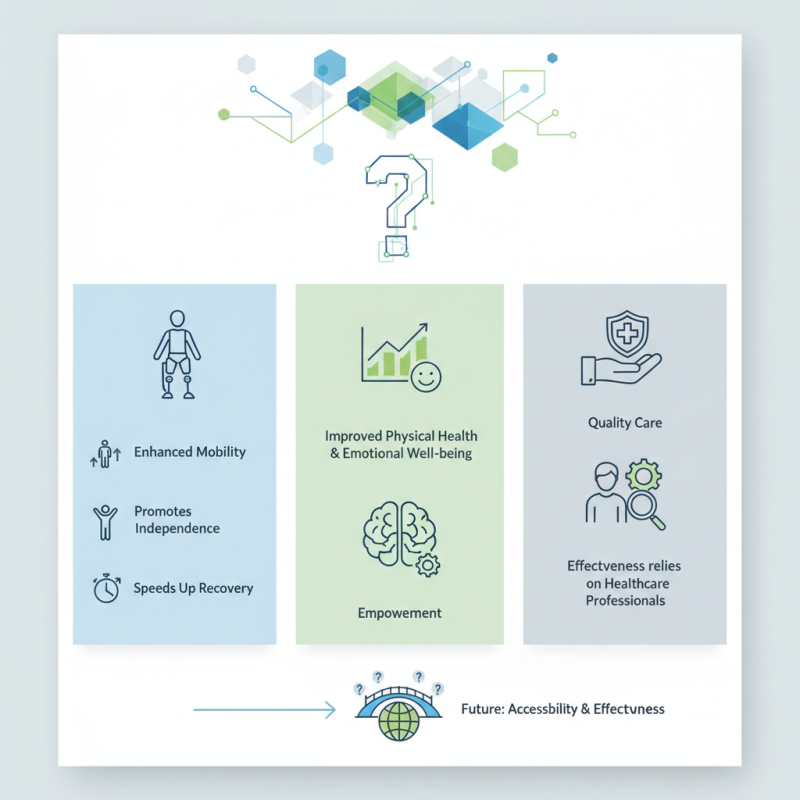
In 2026, the landscape of rehabilitation support equipment has transformed. These tools are no longer just optional aids; they are essential for recovery. What are the benefits of rehabilitation support equipment? They enhance mobility, promote independence, and speed up recovery times.
Research indicates that users experience significant improvements in their physical health and emotional well-being. Many patients report feeling empowered. Equipment such as exoskeletons and adaptive devices can change lives. However, not all programs receive adequate funding. This can limit access to the latest technology.
Investing in rehabilitation support equipment is not just a financial decision; it’s a commitment to quality care. The effectiveness of these tools relies heavily on the expertise of healthcare professionals. Despite the challenges, the potential benefits far outweigh the obstacles. As we look to the future, we must question how to improve accessibility and effectiveness.
Rehabilitation support equipment in 2026 offers various advantages for patients recovering from injuries or surgeries. These tools enhance mobility and independence, allowing individuals to participate in their healing process actively. For instance, advanced exoskeletons help users regain walking ability, significantly improving their confidence and quality of life.
Moreover, personalized therapy tools adapt to individual progress. They ensure that recovery aligns with each user’s specific needs. This flexibility is crucial in rehabilitation, where one-size-fits-all solutions often fall short. However, the cost of these technologies can be a barrier. A balance must be found between investing in advanced equipment and ensuring accessibility for all patients.
Equally important is the ongoing training for healthcare providers. They need to understand how to use and maintain these devices effectively. While technology plays a key role, the human touch cannot be overlooked. Building a relationship between professionals and patients is essential for optimal recovery. Investing in rehabilitation support equipment is not only about technology; it’s also about fostering a supportive environment for healing.
This bar chart illustrates the key benefits of rehabilitation support equipment projected for 2026. Each category showcases the potential impact on patient care, highlighting significant improvements in mobility, recovery speed, pain reduction, quality of life, and cost-effectiveness.
The landscape of rehabilitation technology is rapidly evolving. In 2026, advanced rehabilitation support equipment will play a crucial role in enhancing recovery processes. These innovations provide tailored solutions for individual needs. Patients recovering from injuries or surgeries can benefit from devices that promote mobility and strength. The integration of AI in these tools allows for personalized therapy, adapting to the patient’s progress.
Moreover, technology advancements improve accessibility. Virtual reality simulations create immersive therapy experiences. Such tools can engage patients in ways traditional therapy cannot. Rehabilitation professionals gain valuable insights through data analytics. This enhances treatment plans, making them more effective. However, the reliance on technology raises concerns. Is it overshadowing the human touch in therapy? Balancing high-tech solutions with personalized care is essential.
Investing in these technologies is not just about cost. It’s about improving patient outcomes. Providing access to innovative tools can change lives. But we must reflect on how these changes affect the therapy relationship. Ensuring that technology complements rather than replaces personal interaction is critical for meaningful recovery.
| Dimension | Description | Impact Factor (1-10) | Investment Priority (1-10) |
|---|---|---|---|
| Improved Mobility | Equipment designed to enhance patients' ability to move freely. | 9 | 8 |
| User Engagement | Technologies that encourage active participation in rehabilitation. | 8 | 7 |
| Data Tracking | Advanced monitoring systems for progress assessment. | 10 | 9 |
| Customizable Solutions | Equipment tailored to individual patient needs. | 7 | 6 |
| Cost Efficiency | Long-term savings on therapy through effective treatments. | 8 | 8 |
Investing in rehabilitation support equipment has shown notable cost-effectiveness in recent studies. According to a 2023 report from the Global Rehabilitation Alliance, facilities that adopted advanced rehabilitation technologies saw a 30% reduction in recovery time for patients. This faster recovery translates into lower hospital costs and fewer resources consumed. Every dollar spent on rehabilitation tools returned an average of $2.50 in savings for healthcare systems.
Additionally, a 2022 study published in the Journal of Rehabilitation Research indicates that patients using these technologies report 20% higher satisfaction rates with their rehabilitation process. This aligns with increased adherence to therapy regimens. However, some facilities still hesitate to integrate these innovations due to upfront costs. A reflection on this mindset reveals an opportunity for improvement. Embracing modern rehabilitation equipment can ensure long-term financial sustainability and better patient outcomes.
Despite the upfront investment, the potential long-term benefits are significant. The National Institute of Health suggests that investing in rehabilitation can lead to decreased disability rates among patients, indirectly reducing costs associated with long-term care. Yet, it is crucial to carefully assess the specific needs and potential impact before committing resources. Balancing immediate expenses with future needs could enhance overall healthcare efficiency.
Rehabilitation support equipment is revolutionizing patient recovery. In 2026, its role in enhancing recovery times is more evident than ever. Studies show that patients using advanced rehabilitation tools experience significant improvements. For instance, a two-week recovery time reduction is often reported with these technologies.
These devices cater to various rehabilitation needs. They assist in physical therapy, mobility, and strength building. Patients feel more empowered and engaged with their recovery process. However, not all patients adapt well to these innovations. Some may struggle with technological interfaces or unfamiliar equipment. This discrepancy can hinder progress, highlighting the need for tailored solutions.
Healthcare professionals emphasize the importance of proper training. Understanding how to use these tools effectively can make a substantial difference. Ongoing support and evaluation are key to optimizing outcomes. Recovery is a complex journey, and rehabilitation equipment is just one piece of the puzzle. Each patient presents unique challenges that require careful consideration and adjustment.
The future of rehabilitation equipment is promising and versatile. In 2026, innovations will enhance recovery processes significantly. Smart technology will play a vital role. Wearable devices may track progress in real time. This personalized approach can boost motivation for patients.
Market growth is also notable. The increasing aging population drives demand for effective rehabilitation tools. As people seek better quality of life, investment in these technologies grows. However, challenges remain. Not every facility has access to advanced equipment. It raises concerns about equitable healthcare.
Investors should consider various factors. Emerging technologies may overshadow older systems. Keeping up with trends can be difficult. Understanding which innovations truly benefit patients is essential. Industry experts suggest ongoing research is crucial for long-term success. The goal should always be improved patient outcomes. Reassessing methods regularly can lead to better solutions for everyone.
: Advanced rehabilitation technology enhances recovery by providing tailored solutions for individual patient needs.
AI personalizes therapy, adapting to the patient's progress to optimize recovery experiences.
Virtual reality creates engaging therapy experiences, helping patients stay motivated during their recovery journey.
Facilities that use advanced technologies often see a 30% reduction in recovery time, lowering hospital costs.
Patients using advanced tools report 20% higher satisfaction rates, leading to better adherence to therapy regimens.
Some facilities hesitate due to upfront costs, reflecting a mindset that may overlook long-term benefits.
Proper training and ongoing support are essential for effective use and optimizing recovery outcomes.
Not all patients adapt well; some may face challenges with technology, indicating the need for personalized approaches.
Balancing technology with personal interaction is critical for meaningful recovery and a strong therapist-patient relationship.
Careful assessment of needs and balancing present expenses with future impacts is essential for overall efficiency.
The article "Benefits of Rehabilitation Support Equipment in 2026: Why Invest?" explores the significant advantages of investing in rehabilitation technology. It outlines the advancements in this field and emphasizes their importance for improving patient care. What are the benefits of rehabilitation support equipment? These include enhanced recovery times and better patient outcomes, as modern devices facilitate more effective therapies tailored to individual needs.
Additionally, the article discusses the cost-effectiveness of such investments, illustrating that while the initial outlay may be substantial, the long-term savings and improved patient health justify the expense. Furthermore, it highlights anticipated trends in rehabilitation equipment, suggesting a promising market growth that is likely to revolutionize the healthcare landscape over the next few years.

Merlix Chair