What Are the Top Benefits of Lightweight Mobility Devices?

Time:2026-11-01 Author:Amelia
0%

Lightweight mobility devices can make everyday movement feel less like a task and more like a choice. A folding scooter lifted into a car, or a compact wheelchair steered through a narrow café aisle, can help people manage familiar routines with less effort. Still, “lightweight” does not automatically mean comfortable, safe, or suitable. The right choice depends on the user’s strength, balance, travel habits, and support needs.

So, what are the advantages of lightweight mobility devices? To explore that question, this article considers portability, easier handling, travel flexibility, and the potential to support independence. Rehabilitation engineer Dr. Rory Cooper has spent much of his career advancing wheelchair design and access. A fair paraphrase of the principle behind that work is: “Mobility technology should fit a person’s life and support their participation.” This is a paraphrase, not a verbatim quotation. The practical point matters: a device should work in the places someone actually goes, not only look convenient in a product listing.

There are trade-offs, too. A lighter frame may be easier to lift, yet some models offer less range, cushioning, or stability than a heavier alternative. Small details count: Can the device fit beside the hallway shoe rack? Can its battery last through a long museum visit? Those questions deserve real-world testing. Lightweight devices can open useful options, but they are not a universal fix. Choosing well may take time—and an honest rethink of daily needs.
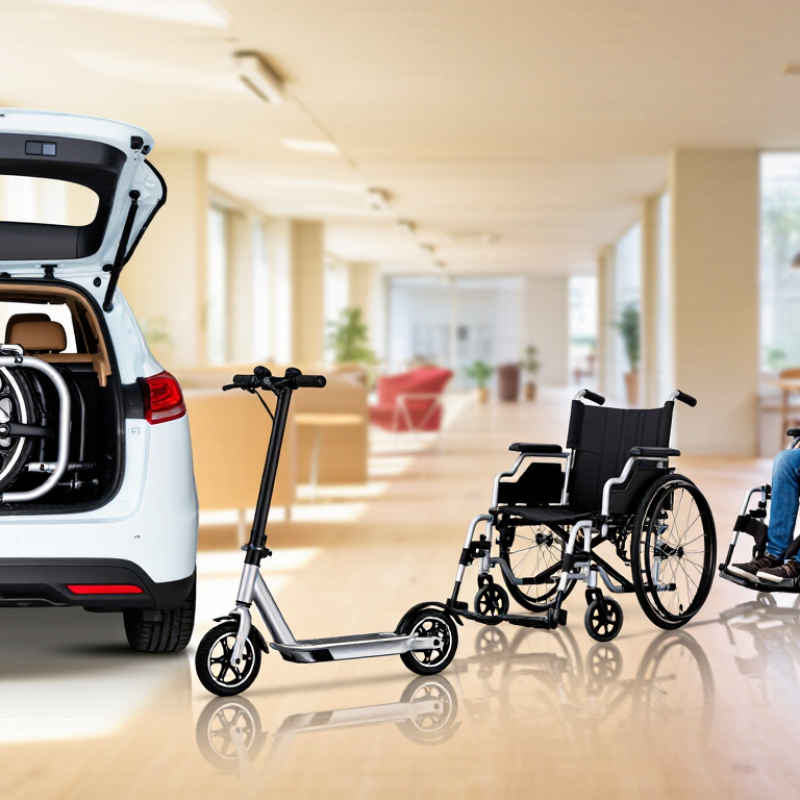
What Are the Top Benefits of Lightweight Mobility Devices?

WHO: 2.5 Billion People Need Assistive Products, Rising to 3.5 Billion by 2050

WHO estimates that 2.5 billion people need at least one assistive product today. By 2050, that figure could reach 3.5 billion. This growing need makes practical mobility support increasingly important. Lightweight devices can be easier to lift into a car, carry over a doorstep, or maneuver through a narrow hallway. Less effort matters. But weight alone does not determine whether a device is safe or useful.

An appropriately fitted lightweight wheelchair, rollator, or other mobility aid may make everyday travel and storage easier. Some people may find it simpler to bring equipment on public transport or keep it close to the front door. Benefits depend on strength, balance, terrain, and individual needs. A very light frame may feel less stable for some users, and small wheels can struggle on uneven pavement. Lighter is not always better; comfort and fit deserve equal attention.

Tips: Check the device’s weight, handle height, brakes, and folded size. If possible, try it on the surfaces you use daily. A qualified rehabilitation professional can help assess fit and safety, as needs may change over time.

Global Need for Assistive Products Is Growing

WHO estimates that 2.5 billion people need one or more assistive products today; this could rise to 3.5 billion by 2050.

Lightweight mobility devices can be easier to lift, transport, and store. These figures show the broader global need for assistive products, not the number of people who specifically need lightweight mobility devices. Source: World Health Organization (WHO).

Wheelchair Access: WHO Estimates 80 Million People Need a Wheelchair

What Are the Top Benefits of Lightweight Mobility Devices?

Wheelchair Access: WHO Estimates 80 Million People Need a Wheelchair

The World Health Organization estimates that around 80 million people worldwide need a wheelchair. Yet needing one does not guarantee access to a suitable chair. Cost, limited local services, and long waits can leave people without equipment that fits their bodies and daily routines. That gap matters. A wheelchair can help someone reach a classroom, travel to work, or move around home with greater independence.

Lightweight mobility devices can be easier to lift into a car, maneuver through narrow hallways, or transport on public transit. But lighter is not automatically better. A chair still needs proper fit, support, and safe handling for its user and environment. A small mismatch can cause discomfort over a long day. Access also means assessment, repairs, and training—not just receiving equipment. These needs are easy to overlook.

Tips: Before choosing a device, consider doorway widths, travel habits, and who may help with lifting. Ask a qualified rehabilitation professional about fit and safe use. Try the chair on the surfaces you encounter most, such as uneven sidewalks or carpet. Real needs vary, and the perfect option may take some adjustment.

Lightweight Design: Easier Lifting, Vehicle Loading, and Home Storage

A lightweight mobility device can make ordinary transitions less awkward: lifting it over a door sill, placing it in a car trunk, or moving it beside a narrow hallway. Lower weight can reduce effort during repeated loading and unloading, particularly for users or caregivers. It may also make spontaneous outings easier. That matters daily. Still, lighter does not automatically mean easier. Grip points, folding steps, wheel design, and balance all affect handling. A device that feels manageable in a showroom may be awkward at a curb or when the trunk is already full.

Home storage is another practical concern. AARP’s 2024 Home and Community Preferences Survey found that 75% of adults aged 50 and older want to remain in their current homes as they age. A compact, foldable device can fit near an entryway without blocking a walkway. The CDC’s 2023 disability data report estimated that 28.7% of U.S. adults had a disability; that figure covers disabilities broadly, not mobility-device users alone. Small detail. Before choosing, measure the car opening, trunk depth, and storage space, then test lifting the folded device. I would not judge by weight alone: a few pounds saved may be offset by an awkward latch or poor balance.

Everyday Mobility: Supporting Independent Travel and Community Participation

A lightweight mobility device can make an ordinary trip feel more manageable: rolling to a nearby café, boarding a bus, or carrying a folding aid into a friend’s home. The World Health Organization’s 2022 Global Report on Assistive Technology estimates that 2.5 billion people need one or more assistive products, including mobility aids. Access matters. A device that is easier to lift, steer, or store may help someone travel with less reliance on others. Yet lightweight alone is not enough. Fit, stability, comfortable grips, and the user’s strength all affect whether it works in daily life.

Travel barriers remain substantial. The U.S. Bureau of Transportation Statistics, analyzing the 2017 National Household Travel Survey, estimated that 25.5 million Americans aged five and older had disabilities that made leaving home difficult. A suitable mobility aid can support errands and community activities, but sidewalks, steep ramps, crowded buses, and bad weather still shape the journey. Small details matter. A compact device may fit beside a café table, while a secure brake can help during a pause on a slope. It is also worth being honest: lighter equipment can involve trade-offs in comfort or durability. Trying it on familiar routes, with advice from a qualified mobility professional, can reveal what specifications alone cannot.

What Are the Top Benefits of Lightweight Mobility Devices? - Everyday Mobility: Supporting Independent Travel and Community Participation

Device Type Potential Benefit Everyday Travel Example Useful Outcome to Track Practical Consideration
Lightweight cane Provides a point of support and may improve balance for some people who can walk independently. Walking around the home, visiting nearby shops, or navigating short routes. Walking confidence, steadiness, and the distance managed comfortably. Correct height and use matter; a clinician can advise on fit and which side to hold it on.
Folding walking frame or rollator Offers a wider support base; a rollator may also provide a seat for planned rest breaks. Moving through a community space or taking a rest during an outing. Number of planned outings, rest-break needs, and ability to complete the route. Check that the device fits through doorways and that brakes, wheels, and any seat are suitable for the user.
Lightweight manual wheelchair Can support mobility when walking is difficult, tiring, or not practical for a particular journey. Attending appointments or joining family and community activities. Participation in chosen activities, comfort, and assistance needed for each trip. Self-propelling requires upper-body effort; some users may benefit from assistance or a power-assist option.
Compact powered wheelchair Provides powered mobility for people who cannot propel a manual chair reliably or comfortably. Travelling around accessible indoor spaces and suitable outdoor routes. Routes completed, access to destinations, and charging or support needs. Consider turning space, ramps, surface conditions, transport arrangements, and battery range for the specific model.
Mobility scooter May help a person who can sit upright and operate the controls travel farther with less walking effort. Making longer local trips, such as travelling around a large site or shopping area. Independent trips completed and access to everyday destinations. Suitability depends on posture, transfers, steering ability, route conditions, storage, and transport needs.
Lightweight transport wheelchair Allows a companion to push the user when walking is not manageable for the whole outing. Long visits, busy venues, or trips where the user wants to save energy for the activity. Outings completed, comfort during the trip, and assistance available. Usually requires a companion to push; check brakes, footrests, and safe loading before travel.

Benefits vary by person, device fit, route, and environment. A qualified healthcare or mobility professional can help assess safe use and individual needs.

ISO 7176-5: Measuring Wheelchair Mass and Dimensions for Comparison

Lightweight mobility devices can reduce the effort of lifting a wheelchair into a vehicle or carrying it over a doorstep. But “lightweight” needs a consistent measurement. ISO 7176-5:2008 specifies methods for determining wheelchair dimensions, mass, and manoeuvring space. This lets buyers compare figures measured on a more consistent basis, rather than relying on vague product descriptions. Small differences matter when a folded chair must fit beside a suitcase.

Mass alone tells only part of the story. The WHO and UNICEF Global Report on Assistive Technology (2022) estimates that 2.5 billion people need one or more assistive products, with nearly one billion lacking access. That scale makes useful, comparable product information important. Still, ISO measurements do not describe comfort, stability, or how easily a particular user can lift a device. Configuration also matters: batteries, footrests, and other fitted parts can change the measured mass. The number can look reassuringly neat; real-world handling is less tidy.

Tips: Check which parts were fitted during weighing, and compare like with like. Measure your car boot or hallway, too. A few centimetres can decide whether a device fits. Ask for the test configuration if it is unclear.

FAQS

How many people need assistive products today?

An estimated 2.5 billion people need at least one assistive product. The figure could reach 3.5 billion by 2050.

How many people need a wheelchair?

Around 80 million people worldwide need a wheelchair. But many still lack one that fits their body and daily routine.

What can a lightweight mobility device make easier?

It may be easier to lift into a car, carry over a doorstep, or steer through a narrow hallway. Small details matter.

Does a lighter device always work better?

No. A very light frame may feel less stable, and small wheels can struggle on uneven pavement. Comfort matters too.

What should someone check before choosing a mobility aid?

Check its weight, handle height, brakes, and folded size. Consider doorway widths and who might help with lifting.

How can someone tell if a device suits daily travel?

If possible, try it on familiar surfaces, such as carpet or uneven sidewalks. A qualified rehabilitation professional can help assess fit and safe use.

Can a mobility aid remove travel barriers?

It can support errands and community trips, but steep ramps, crowded buses, and bad weather may still make travel difficult. Not every route is easy.

What else matters besides receiving the equipment?

Assessment, repairs, and training also matter. Needs can change, and finding the right option may take some adjustment. I may be overvaluing compactness here; a comfortable fit can matter more.

Conclusion

With an estimated 2.5 billion people needing assistive products worldwide—and that number projected to reach 3.5 billion by 2050—the need for practical mobility support is growing. The World Health Organization estimates that around 80 million people need a wheelchair. These figures highlight why it is worth asking: what are the advantages of lightweight mobility devices? Their reduced weight can make everyday handling simpler for users and caregivers.

A lightweight device is often easier to lift into a vehicle, move through the home, and store when not in use. This convenience can help people travel more independently and take part in community activities with fewer practical barriers. For meaningful comparisons, ISO 7176-5 provides methods for measuring wheelchair mass and dimensions, giving users and professionals consistent information when considering different mobility options.

Amelia

Amelia

Amelia is a seasoned marketing professional with a wealth of expertise in our company’s core offerings. With an unwavering passion for driving growth and innovation, she plays a pivotal role in shaping our marketing strategies and enhancing brand visibility. A key aspect of her responsibilities......