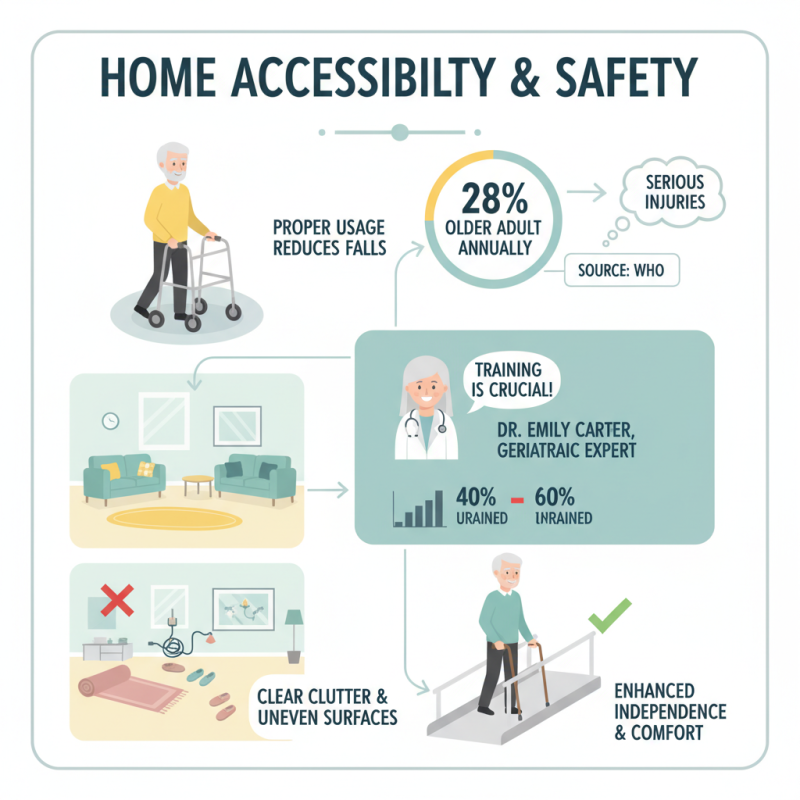
As the aging population increases, understanding "how to use mobility aids safely at home" becomes crucial. According to the World Health Organization, approximately 28% of older adults experience a fall each year, often leading to serious injuries. Dr. Emily Carter, a leading expert in geriatric care, emphasizes, "Proper usage of mobility aids can drastically reduce the risk of falls." This highlights the urgent need for education on safety practices at home.
Mobility aids, such as walkers and canes, promote independence. However, many are unaware of their proper use, which can lead to accidents. A survey conducted by the National Institute of Health found that only 40% of users received training on their mobility devices. Clear instructions and practice are essential for safe usage.
Navigating home environments presents challenges. Uneven surfaces or clutter can hinder safety. Individuals often underestimate these hazards. By enhancing awareness and knowledge, users can enjoy better accessibility and comfort in their homes. Investing time in learning how to use mobility aids safely at home is a vital step toward ensuring a safer living space.
Assessing the need for mobility aids in your home environment is essential for enhanced accessibility. According to the World Health Organization, over 1 billion people worldwide experience some form of disability. Understanding your specific mobility challenges can guide the selection of appropriate aids. Begin by evaluating the layout of your home. Are there obstacles like steps or uneven surfaces? These can significantly hinder movement.
Consider conducting a safety audit for your living space. Ensure hallways are clear and consider using non-slip mats. A study from the National Institute on Aging highlights that 36 million older adults fall in the U.S. each year, underscoring the importance of a safe environment. Mobility aids like walkers and grab bars can provide crucial support. Make a list of tasks that are difficult to perform, such as getting in and out of the shower.
It’s also important to acknowledge the emotional aspect. Some may feel reluctant to use mobility aids, fearing stigma. This hesitation can lead to dangerous situations. Reflect on how these tools can enhance independence rather than diminish it. Small adjustments can lead to significant improvements in safety and comfort.
Choosing the right mobility aids is essential for enhancing accessibility at home. Each individual's needs differ, so a personalized approach is crucial. Consider your daily activities. Will you need assistance while moving from a chair or while navigating stairs?
Begin by assessing your living environment. If space is limited, opt for collapsible or lightweight aids. For larger areas, you might explore sturdy walkers or transport chairs. Think about grip comfort too. This can impact your ability to use these aids effectively. It’s important to know that what works for someone else may not be suitable for you.
Test different options before making a choice. Visit local health stores or borrow aids from friends. Ensure that the mobility aids suit your home layout. Reflect on your experiences. If something feels uncomfortable, reconsider your options. The right choice can significantly improve your quality of life. Always prioritize safety and comfort in your decision-making process.
Navigating a home can be challenging for individuals using mobility aids. Research shows that 70% of accidents occur due to cluttered pathways. To promote safety, it’s crucial to keep pathways clear. Regularly remove obstacles like shoes, rugs, and furniture to enhance accessibility. Even small items can pose significant risks.
Lighting also plays a vital role in safe navigation. Bright, uniform lighting reduces shadows and highlights potential hazards. According to the National Institute on Aging, proper lighting can lower the risk of falls by 50%. Motion-sensor lights can provide added safety in hallways or rooms. Some individuals may need reminders to keep areas tidy.
It’s important to consider furniture placement. Ensuring it creates a clear route is essential. Inadequate spacing can result in accidents. It is also worth noting that as mobility needs change, so should the environment. Adapting homes to meet safety requirements is an ongoing process. Regular assessments can help identify potential risks.
Using mobility aids effectively at home can significantly enhance accessibility. Various statistics indicate that around 25% of seniors fall each year. Proper use of these aids is crucial for preventing such incidents.
When using mobility devices like canes or walkers, ensure they are appropriately sized. A cane should reach the wrist when standing. Users must grip the aid firmly and take small, careful steps. It often helps to practice walking with someone nearby for support. This can alleviate anxiety and boost confidence.
Furthermore, creating a clutter-free environment is essential. Items should be stored out of walkways to prevent tripping. Work on developing a habit of routinely assessing the home. It’s easy to overlook hazards that may pose risks. Lastly, regular maintenance of mobility aids is vital. Devices should be inspected frequently; worn parts can lead to accidents.
Regular maintenance of mobility aids is crucial for safety and accessibility at home. These devices—like walkers and wheelchairs—require routine checks to ensure they function correctly. Inspecting wheels for wear, testing brakes, and ensuring that moving parts are lubricated can prevent accidents.
Tips: Keep a checklist for your mobility aids. Include tasks like tightening screws, checking seat stability, and ensuring no obstructions are present.
If you encounter issues, troubleshoot promptly. Sounds or movements that seem off may indicate a problem. Consider all factors: terrain, fatigue, and device condition. Think about using your aids in different areas of your home. This can help you spot potential hazards.
Tips: When troubleshooting, ask for assistance. Another set of eyes can catch issues you might overlook. Regularly note your observations and experiences. This may reveal patterns in what needs attention.
| Mobility Aid Type | Safety Tips | Regular Maintenance | Common Troubleshooting Issues |
|---|---|---|---|
| Wheelchair | Check brakes before use; keep pathways clear. | Inspect tires for wear; lubricate moving parts regularly. | Wheels not rolling smoothly; brakes not engaging. |
| Walker | Ensure walker legs are level; practice using it on flat surfaces. | Check rubber tips for damage; tighten any loose screws. | Walker wobbling; rubber tips missing. |
| Cane | Use cane on opposite side of injury; ensure proper height. | Inspect for cracks; ensure handle is secure. | Cane not stable; tip worn out. |
| Transfer Bench | Check that it fits securely in the tub or shower; use non-slip mats. | Examine support legs for fractures; ensure surface is non-slip. | Bench not stable; legs slipping. |
: Assessing mobility needs enhances accessibility and safety. It helps identify obstacles that hinder movement.
Look for steps, uneven surfaces, and clutter in pathways. These can significantly impact mobility.
Conduct a safety audit. Clear hallways, use non-slip mats, and ensure proper lighting to reduce fall risks.
Some may feel stigma or reluctance to use aids. This can lead to dangerous situations.
Regularly check wheels, brakes, and moving parts. Keep a checklist of maintenance tasks for better safety.
Troubleshoot promptly and consider all factors. Ask for help to identify any overlooked issues or hazards.
Proper lighting reduces shadows and highlights hazards, lowering fall risks significantly.
Regular assessments are essential. As mobility needs change, the home environment should adapt accordingly.
Furniture should create clear pathways. Inadequate spacing can increase the risk of accidents.
Yes, small adjustments can lead to significant improvements in safety and comfort at home.
The article "How to Use Mobility Aids Safely at Home for Better Accessibility" provides a comprehensive guide for individuals seeking to enhance their mobility at home. It begins by addressing how to assess the need for mobility aids in one’s living environment and emphasizes the importance of selecting the right aids tailored to individual needs and available space. Ensuring safe navigation is also crucial, which involves maintaining clear pathways and managing potential obstacles.
Moreover, the article offers guidance on proper techniques for using mobility aids effectively within the home, promoting independence and reducing the risk of accidents. Regular maintenance and troubleshooting tips are included to ensure that the aids remain in good working condition, thereby reinforcing how to use mobility aids safely at home. By following these guidelines, individuals can improve their accessibility and quality of life in a safe and supportive environment.

Merlix Chair